Wednesday, July 20, 2011

Public Transport Perception


In India, roads are designed as per the needs of the private automobile user. This is clearly a one sided approach and partially the reason behind which there are maximum road transport hurdles.

The solution to clear road related transport issues is by simply looking at the number of people travelling in public transport versus number of individuals using private vehicles against the given utilized capacity of that vehicle at a given point of time. On average in Mumbai, Delhi, Kolkata and Bangalore 45% of the trips are less than 5 kilo meters. This proves threat to available land space for modes of public transport.


In Kolkata 6% of land is under land network and in Delhi it is 21% of the land space. So for example, in Delhi, average speed of vehicles is 11 kilo meters an hour though for the Bus Rapid Transit system the average speed is 20 kilo meters an hour. This might not be a great comparison though with 75% vehicles being privately owned in Delhi, this only caters to 33% of the population and this is a reason to invest in the improvement of public transport infrastructure.

Thursday, July 14, 2011

India's Energy-Transport Matrix

The entire month of June I was in New Delhi attending a month long fellowship on India's environmental concerns organized by the Center for Science and Environment titled Agenda for Survival. This post as well as various following posts are going to be about certain interesting leanings from the course.

The key message of the matrix is, to shift towards sustainable practices and simultaneously avoid future emissions.

India's Integrated Energy Policy, 2006 frames an analysis considering India's growth at 8-10% annually. Such growth calls for an increase in India's electricity supply six fold to meet Millennium Development Goals. This also means an increase in primary energy supply four fold. Now if coal is going to be the primary energy source in India till 2030, there is an urgent need to understand and shift to renewable sources of energy. India also happens to import nearly 75% of its crude oil energy. The transport part of the matrix comes in at this point.


What do we do to make our cars more fuel efficient?

In India, the automobile industry is trying to buy itself time. This time would delay the switch from Bharat Stage IV to V and further improved standards, the equivalent to Euro auto emission standards. This is being done as auto car manufacturers have other better concerns.

The possibility of greening current fleet of vehicles on roads is very high. This is the understanding - All auto companies follow the law of the land. Thus, same car in two different countries would have separate fuel economies. Indian auto manufacturers do sell else where around the world. At this point they must follow the standards set on foreign land. Though the companies are not interested in being philanthropic.

Getting back directly to the point of coal manufacturing. Cars in India, are the second largest users of diesel. Even if there is an increase in large cars running on diesel by 10% in India, it would lead to disastrous irreversible effects. Solutions such as bio fuels from cellulose can reduce green house gasses by 50-80% . Yet bio fuels require large amounts of land, threat to agricultural production and create concerns of food security. Solar power costs Rs. 20 per kilo watt and hour of energy. Creating market for solar power would reduce prices and cost on the buyers end, this is a smart thing to do.

The facts are before us, life cycle assessment could prove resourceful in such a case. Though, we must realize that our dependency on coal power must be minimized and this is urgent.

Saturday, April 30, 2011

Going Electric

The New York Times publishes selected articles in a concise supplement which we receive every Saturday, here in Mumbai, India.
I have come across two very interesting articles on energy efficiency in modern day vehicles.

The current blog entry is picked from the following article - 'To help car buyers think electric, a better battery'.

The question - what can be done to make electric vehicles the choice of future auto purchasers? The answer lies in, improved battery manufacturing technologies which would reduce cost, enhance battery life and increase per kilo meter of kilowatt vs gasoline range. This would culminate to a shift in consumer tastes and expansion of the alternative fuels market.

Lithium-ion batteries in vehicles with scope for further research and innovation would prove acceptable at a mass level in a decade's time. Lithium being blended with various materials could result into a higher voltage  and increased energy density. This would prove in releasing such batteries off their greatest drawback, the battery life.


As per cost, currently, an electric vehicle would cost $750-800 per kilowatt an hour. In order to facilitate a parity between gasoline powered vehicles the cost must come down to $200 per kilowatt-hour.

India, has shown the potential to launch electric vehicles. As per current electric vehicle standards globally, India must largely invest into research and development in this field and must understand the potential of such technology.

Such is the scope of going electric.

Sunday, April 3, 2011

Delhi Metro - 100,000 tonnes at a time


Only yesterday I returned back to Mumbai from Delhi.
Here is a video of the DMRC project of the Delhi Metro.

The Delhi Metro Rail Corporation helps in preventing 100,000 tones of CO2 emissions from emitting into the air, annually. It runs across a distance of 190 kilo meters and connects areas very effectively.

It is a blessing for the 2 million daily commuters.

Saturday, February 19, 2011

Sustainable Opportunities


ON 11TH FEB, 2011, I had attended a round table discussion on the port infrastructure and city transport logistics in Rotterdam and its experience for Indian port cities.

The discussion was headed by presentations of two professors who were also transport experts. Amongst the presence of various government and shipping authorities was Satyagiri Shipping Co. Ltd, one of India’s leading sustainable conscious shipping companies.

The port of Rotterdam has had many difficulties as a docking station in Central Europe. Over the years the port has achieved efficiency in port infrastructure to allocate maximum number of ships at a particular given time. It has also engaged maximum transport facilities to the port by creating separate lanes. Due to major trade with Germany the route design from the Netherlands to Germany has been altered to make a direct and time saving passage.

Professor Bart Kupiers spoke about the port of Rotterdam and its hinterland network. He stressed on how road transport congestion is similar between Mumbai and Rotterdam, ‘with a lot of congestion the level of living of people in these areas are affected’. He mentioned that the road transport moving towards the port area (which are in large numbers) must make ‘use of clean modes of transport’. The ‘use of clean fuels’ will reduce avoidable health issues for the people in this region. Further more, Professor Kupiers discussed the most interesting part – solutions. He listed the future trends of the port of Rotterdam. This was characterized by paying attention to various segments –

Growth of network
Growth in city centre
Growth in knowledge intensive industry
Growth in sustainable trade
Growth of logistics (green port)
Growth of creative industry

Professor Harry Geerlings spoke about the challenges of sustainable mobility. He explained sustainability as a combination of profit, people and the planet. With depleting natural resources, industries should aim at using renewable forms of energy. There is ample scope to delve into future technologies for sustainable growth in the shipping industry of India. Although, as India is fed by coal power a possible black swan problem could take place. We must me careful not to commit an act on nature so grave that it has an irreversible impact on mankind, especially India.

The round table concluded with mixed reactions due to differences in the dynamics of Indian ports and port of Rotterdam. Although, attempts such as the current discussion, Indian companies such as Satyagiri Shipping Pvt. Ltd and interactions with experienced individuals in the specialized field, sustainable opportunities in the Indian context is not far away.


Photo link - http://www.portofrotterdam.com

Friday, December 3, 2010

Green Star Ratings


The Bureau of Energy Efficiency, a department handled directly by India's PMO has introduced star ratings for privatly owened vehicles to determine the level of impact it has on the environment.

In my opinion, this is not a real effective policy to curb carbon emissions. Individuals are going to buy automobiles till the time they have the demand and capacity to pay for that demand.

Indian government should invest in alternative fuels and green technology; the government must also realize that there is lot of capacity in using waste fuel.

Eventually if the star rating is going to be determined by fuel efficiency, there is not going to any real favorable change in the state of the environment.

There must be a more effective model implemented, as star ratings are only going to raise the selling price of the automobile. As a whole this is going to disrupt the Indian automobile sector.

Sunday, November 14, 2010

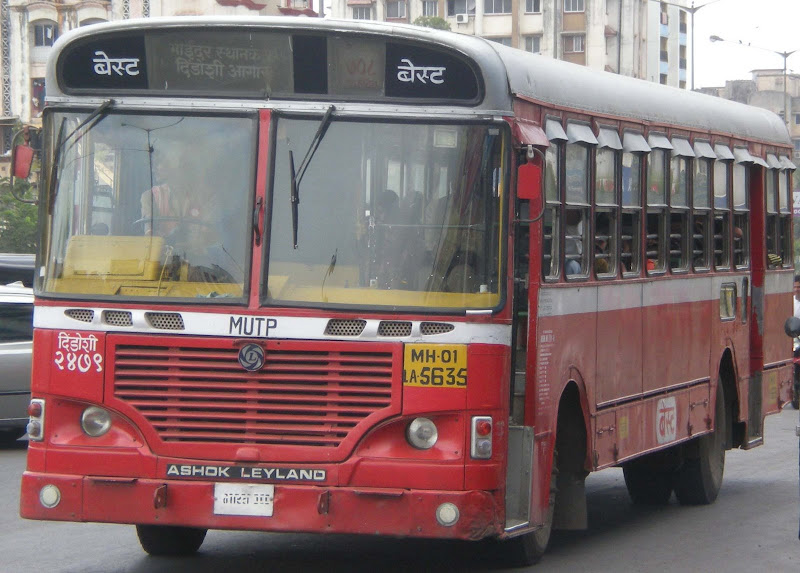
London and Mumbai Buses

This morning I happened to read an interesting article on the local traffic conditions in the city. The article was written by Ashok Datar, Mumbai based transport expert and environmentalist. On visiting his website www.mesn.org, I found some further interesting facts -

- London has a fleet of 8000 busses, making it one of the biggest in the world, with over 6,000,000 passenger journeys made every weekday


- As of today Mumbai has a BEST fleet of 3900 busses


In London, there are separate bus lanes and this motivates commuters to use the bus service. There are 6800 busses being utilized daily. The average capacity of a Routemaster (London public bus) is 72 passengers, for double-decker bus.

Whereas in Mumbai there are 4.6 million passengers using bus services daily. There are 3500 daily operational busses with an average carrying capacity of 71 passengers per bus.


Looking in comparison -

London - The bus transport usage is increasing rapidly over the years and has increased by 40% since 2001.

Mumbai - There is a need for initiatives such as Mayor's Transport Strategy to be developed.

London population is 7.5 million whereas Mumbai's population is 15 million and counting. With a young and growing population there would be tremendous pressure on public transportation systems. With this understanding, it is assured that buses will play a significant role in daily passenger commute. As a result, Mumbai BEST buses will have to cater to a growing population with increasing demand, improvement in per bus seating capacity, seprate bus lanes would have to be created and eventually make bus transport attractive and appealing.

Sources -  http://www.mesn.org/
http://www.tfl.gov.uk/
http://www.redbuseventtransport.co.uk/

http://lh4.ggpht.com/_g0BK6lHy5WM/SkHCcNSqK-I/AAAAAAAAA0c/Z5zH4g3-yXI/s800/BEST%20BUS%20MIRA%20ROAD.jpg